

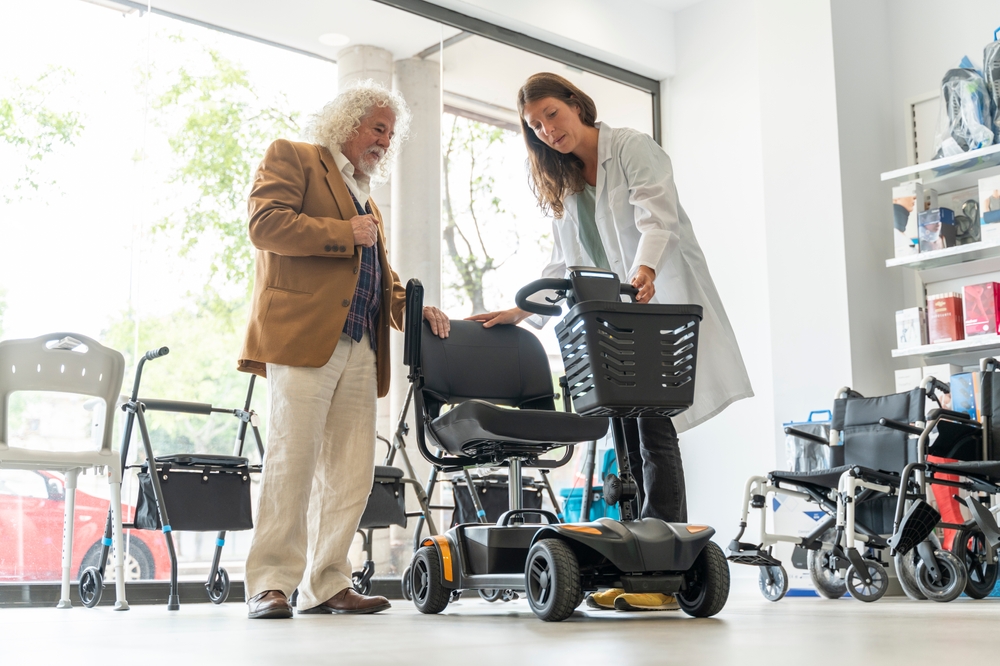
Getting around Binghamton can mean dealing with more than distance. Hills, uneven outdoor surfaces, rain, snow, freezing conditions, and seasonal changes can all affect how comfortable and practical a mobility scooter feels from one trip to the next.
Choosing the right scooter means thinking about where you actually travel, from neighborhood sidewalks and parking areas to indoor stores and community destinations.
Quick answer: The best mobility scooter for Binghamton should match your typical terrain, the slopes you encounter, how often you travel outdoors, your transportation needs, and the conditions in which you plan to use it. For frequent outdoor use, stability, ground clearance, battery range, tire design, braking, and weight capacity deserve particular attention. For mostly indoor use, maneuverability and portability may matter more.
What local riders should know
-
Binghamton’s hills can make climbing ability and braking performance more important than they would be on consistently flat terrain.
-
Winter snow, freezing rain, and wet pavement can reduce traction and make some routes unsuitable for scooter travel.
-
A scooter that works well inside a store may not be the best choice for longer outdoor trips around Broome County.
-
Larger scooters can offer features suited to outdoor travel, but their size and weight may make transportation and indoor maneuvering more difficult.
-
Your safest choice should be based on the manufacturer’s specifications and your individual mobility needs, not appearance or maximum speed alone.
Why Does Choosing the Right Mobility Scooter Matter in Binghamton?
Choosing the right mobility scooter in Binghamton matters because local terrain and weather can place very different demands on a scooter throughout the year. A model that feels comfortable on a smooth indoor floor may perform very differently on a sloped sidewalk, wet surface, or outdoor route during colder months.
The National Weather Service office serving the area reports that the Binghamton valley averages about 60 inches of snow per season, with most snow falling from late November through late March. The agency also notes that freezing rain occurs on average several days each year.
Those conditions make seasonal planning especially important. Snow-covered or icy surfaces may simply be unsafe for scooter travel regardless of the scooter selected.
Local terrain is another consideration. Trips around the West Side, South Side, downtown, or other parts of the community may involve grades and surface changes that require more stability and climbing capability than an indoor-focused scooter provides.
At Penn York Medical, we can help customers consider mobility equipment based on their individual needs and intended use rather than treating every scooter as interchangeable.
What Should You Look for in a Scooter for Binghamton’s Hills?
For Binghamton’s hills, look closely at a scooter’s rated climbing capability, stability, braking system, motor performance, ground clearance, and manufacturer operating limits. The right specifications depend on the grades and surfaces you expect to encounter, so never assume that every full-size scooter is designed for every hill.
Pay particular attention to:
-
The manufacturer’s maximum recommended incline
-
Overall scooter stability and wheel configuration
-
Braking characteristics
-
Ground clearance
-
User and cargo weight limits
-
Battery capacity and expected range
-
Tire type and condition
Going uphill can demand more from a scooter’s battery and drive system than traveling over level ground. Descending also requires careful speed control and reliable braking.
Avoid exceeding the manufacturer’s stated incline limits. A hill that appears manageable does not necessarily fall within a particular scooter’s safe operating specifications.
How Does Binghamton Weather Affect Mobility Scooter Use?
Binghamton’s changing weather affects mobility scooter use by changing traction, visibility, battery performance, and the condition of outdoor travel surfaces. Riders should expect conditions to vary considerably between snowy winter months, wet spring weather, warmer summers, and fall periods when leaves and rain can make surfaces slippery.
National Weather Service information for the area describes precipitation as relatively evenly distributed throughout the year and notes significant seasonal snowfall.
That means outdoor mobility requires more than preparing for January.
During spring, watch for standing water, damaged pavement, and debris left after winter. Summer may make longer outdoor trips more practical, but heat and rain still deserve consideration. Wet leaves can create slippery conditions in fall. Winter requires the most caution because snow, slush, ice, and freezing rain can make otherwise familiar routes unsafe.
No mobility scooter should be treated as an all-weather vehicle unless its manufacturer specifically supports the intended conditions.
Which Mobility Scooter Features Matter Most for Local Outdoor Use?
The most useful mobility scooter features for local outdoor use are appropriate range, dependable stability, sufficient ground clearance, suitable tires, comfortable seating, and specifications matched to the terrain. These features become especially relevant if your routine extends beyond smooth indoor floors and level parking areas.
Battery range should include a reasonable margin beyond the distance you expect to travel. Hills, rider weight, temperature, stops and starts, and other operating conditions can affect practical range.
Ground clearance also matters when encountering transitions between surfaces. However, more clearance or larger tires should not be interpreted as permission to travel over unsafe terrain.
Comfort deserves attention too. A scooter may meet technical requirements while still being a poor fit if the seat, controls, steering position, or overall dimensions do not work comfortably for the rider.
What Are the Warning Signs That a Scooter May Not Fit Your Needs?
A mobility scooter may not fit your needs if it struggles on your normal routes, feels unstable, cannot comfortably accommodate you, or creates transportation and storage problems. These issues are particularly important when a scooter will be used regularly around Binghamton rather than only inside a home or facility.
Watch for these signs:
-
The scooter slows substantially or struggles on grades within your normal route.
-
Steering or stability does not feel appropriate for the surfaces you use.
-
Your typical trips approach the scooter’s practical battery range.
-
Ground clearance is insufficient for normal surface transitions.
-
The scooter is difficult to load into your vehicle.
-
The scooter does not fit comfortably through spaces you regularly navigate.
-
Controls, seating, or transfers are uncomfortable or difficult.
-
Your intended use falls outside the manufacturer’s operating recommendations.
When Should You Ask a Mobility Equipment Professional for Help?
You should ask a mobility equipment professional for help when you are unsure which scooter specifications match your physical needs, transportation setup, typical routes, or local terrain. Comparing products is especially useful before purchasing when you expect to travel outdoors regularly or encounter hills around Broome County.
You can safely start by listing where you expect to use the scooter, how far you normally travel, whether you need to transport it by vehicle, and how much indoor maneuverability matters.
Professional guidance becomes more valuable when you need help understanding product specifications or matching equipment to more complicated mobility needs.
For medical questions about whether a scooter is appropriate for your condition, consult your qualified healthcare professional.
What Common Local Conditions Should Influence Your Choice?
The most important local conditions are hills, winter weather, wet surfaces, pavement transitions, and the mix of indoor and outdoor destinations common to everyday life in the Binghamton area. Thinking through these conditions before selecting a model can prevent choosing a scooter that works well in one setting but poorly in another.
1. Hills and grades
Slopes can affect battery consumption, speed, stability, and braking. Check manufacturer incline specifications carefully.
2. Snow and ice
Snow-covered and icy routes can be unsafe even with a scooter designed for outdoor use. Postponing a trip or using another transportation option may be the safer choice.
3. Rain and wet pavement
Water can affect traction and equipment. Follow the manufacturer’s guidance concerning exposure to moisture.
4. Changing surfaces
Trips may involve transitions among sidewalks, paved lots, ramps, entrances, and indoor flooring. Consider ground clearance and maneuverability together.
5. Transportation
If you regularly travel between Binghamton, Johnson City, Endicott, Vestal, or other Broome County communities by car, scooter dimensions and weight can be just as important as outdoor performance.
How Should You Maintain a Mobility Scooter Through the Seasons?
Seasonal mobility scooter maintenance should focus on batteries, tires, brakes, controls, cleanliness, and manufacturer-recommended service before changing conditions create problems. In the Southern Tier, checking equipment before winter and again after months of cold-weather use can help identify wear before more active spring and summer travel.
Check tire condition and pressure when applicable, inspect the scooter for visible damage, and follow the recommended battery charging procedure.
Keep the scooter clean and dry according to manufacturer instructions. Road salt, moisture, dirt, and debris should not be allowed to accumulate where they could affect components.
DIY maintenance should stop where electrical, braking, steering, battery, or drive-system diagnosis requires technical expertise.
What Results Should You Expect From a Well-Matched Scooter?
A well-matched mobility scooter should make your normal approved routes more practical while providing suitable comfort, control, range, and maneuverability for your needs. It should not require you to routinely push the equipment beyond its stated limits simply to complete everyday trips.
The goal is not necessarily to purchase the biggest, fastest, or longest-range model available. A good match balances outdoor capability with storage, transportation, indoor use, comfort, and the rider’s individual needs.
For someone primarily navigating indoor spaces and short, level trips, a compact model may make sense. Someone who regularly travels longer outdoor routes may need a different combination of features.
What Common Mobility Scooter Buying Mistakes Should You Avoid?
The most common mobility scooter buying mistakes are choosing by price or appearance alone, ignoring local terrain, overestimating advertised range, and failing to consider transportation and storage. Binghamton-area riders can make a more useful comparison by starting with real everyday routes.
Mistake: Choosing primarily for maximum speed.
Consequence: Other characteristics that matter more for everyday usability may be overlooked.
Better approach: Prioritize fit, stability, range, maneuverability, and appropriate terrain specifications.
Mistake: Assuming all outdoor scooters handle hills equally.
Consequence: The scooter may not be appropriate for a route you use regularly.
Better approach: Check the manufacturer’s incline rating and operating guidance.
Mistake: Buying a large scooter without planning transportation.
Consequence: The scooter may be difficult to fit or load into your vehicle.
Better approach: Consider dimensions, weight, disassembly, and your transportation method before purchasing.
Mistake: Treating winter capability as permission to travel on ice.
Consequence: Slippery conditions can create serious traction and control concerns.
Better approach: Avoid unsafe surfaces regardless of the scooter’s outdoor features.
What Is a Common Local Scooter-Buying Scenario?
A common local scenario is a rider who wants one scooter for indoor errands, outdoor neighborhood trips, and occasional travel between communities in the Triple Cities area. That combination can create competing priorities because a highly portable scooter and a more substantial outdoor-oriented scooter solve different problems.
Imagine a resident who needs tight maneuverability inside stores but also wants to navigate longer paved outdoor routes during favorable weather.
Choosing solely for indoor turning space could leave the rider without the desired outdoor capability. Choosing solely for outdoor performance could result in equipment that is inconvenient to transport or maneuver indoors.
The better approach is to identify which uses are essential, then compare scooters that satisfy those requirements within their manufacturer-rated operating conditions.
How Can Penn York Medical Help With Mobility Scooter Options?
Mobility equipment guidance can help you compare scooter features against your actual daily needs instead of relying on specifications in isolation. Penn York Medical can discuss available mobility scooter options with local customers and help them consider factors such as intended use, terrain, transportation, size, and comfort.
How Do Portable and Full-Size Mobility Scooters Compare?
Portable scooters generally prioritize transportation and maneuverability, while larger models may offer different combinations of range, stability, comfort, and outdoor-oriented features. Neither category is automatically best for Binghamton because the right choice depends on where and how the scooter will actually be used.
| Consideration | Portable Scooter | Larger Scooter |
|---|---|---|
| Vehicle transport | Often easier | May require more planning |
| Indoor maneuverability | Often a priority | Depends on dimensions |
| Storage | Generally easier | Requires more space |
| Outdoor capability | Model-dependent | Model-dependent |
| Range | Varies by model | Varies by model |
| Hills | Check rated incline | Check rated incline |
| Comfort | Depends on design | Depends on design |
Always compare individual manufacturer specifications rather than assuming every scooter in a category performs the same way.
What Areas Can Local Mobility Scooter Shoppers Consider?
Residents in Binghamton and nearby Broome County communities can use the same route-based approach when comparing mobility scooters. That includes people traveling around Johnson City, Endicott, Vestal, and the surrounding Southern Tier, where hills and seasonal weather can influence everyday mobility decisions.
The most useful comparison starts with the places you actually need to reach.
What Can Happen If You Choose the Wrong Scooter?
Choosing the wrong scooter can lead to poor fit, insufficient practical range, transportation difficulties, uncomfortable operation, or equipment that is unsuitable for your regular terrain. In an area with hills and significant winter weather, those limitations can become more noticeable as conditions change.
Taking time to compare the right specifications before selecting equipment can reduce the chance of discovering an important limitation later.
Frequently Asked Questions
What type of mobility scooter is best for Binghamton hills?
The best scooter for Binghamton hills is one whose manufacturer-rated incline capability, stability, braking, motor performance, and weight capacity are appropriate for the grades you expect to encounter. Do not choose based only on scooter size. Compare the specifications of individual models against your actual routes and avoid grades outside approved operating limits.
Can I use a mobility scooter in Binghamton during winter?
Winter scooter use depends on surface conditions and the manufacturer’s operating guidance, and snow or ice may make outdoor travel unsafe. The National Weather Service reports substantial seasonal snowfall in the area, so riders should be prepared to postpone trips or use alternative transportation when sidewalks, ramps, or parking areas are slippery.
Does cold weather affect mobility scooter batteries?
Cold temperatures can affect battery performance, so winter users should follow the scooter and battery manufacturer’s charging, storage, and operating recommendations. Because practical range can vary with temperature, terrain, rider weight, battery condition, and other factors, avoid planning trips that depend on achieving the maximum advertised range.
Is a three-wheel or four-wheel scooter better for Broome County?
Neither wheel configuration is automatically better for every Broome County rider because the right choice depends on maneuverability, stability, intended terrain, transportation, and individual needs. Compare specific models and their manufacturer guidance rather than selecting solely by wheel count, especially if your routine combines indoor spaces with outdoor routes.
How much mobility scooter range do I need around Binghamton?
Choose enough range to cover your normal round trip with a reasonable reserve rather than matching your expected mileage exactly. Hills, cold temperatures, rider and cargo weight, battery condition, and frequent starts can influence practical range. Think about your longest routine trip and compare it carefully with manufacturer specifications.
Are mobility scooters suitable for Binghamton parks and trails?
Suitability depends on the individual route, surface, scooter specifications, and current conditions. The City of Binghamton maintains parks and outdoor spaces that include the River Trail, Recreation Park, Ross Park, and other facilities, but riders should confirm accessibility and surface conditions before traveling and follow applicable rules and manufacturer guidance.
What should I consider if I transport my scooter between Binghamton and Vestal?
For frequent vehicle transportation, consider scooter weight, dimensions, disassembly or folding design, and how you will safely load and secure the equipment. A scooter can perform well at your destination but still be impractical if transferring it into and out of your vehicle is difficult.
Should I choose my scooter based on winter conditions alone?
No, your scooter should match your year-round mobility needs rather than winter conditions alone. Binghamton residents may encounter snow and freezing rain in colder months, but spring rain, summer outings, fall leaves, indoor maneuvering, vehicle transportation, and everyday hills can all influence which features provide the best overall fit.
Choose Mobility Equipment for the Way You Live Locally
The best mobility scooter is the one that fits your individual needs, everyday destinations, transportation plans, and the terrain you realistically expect to navigate. Around Binghamton and the Southern Tier, accounting for hills and changing seasonal conditions can make that decision much more practical.
Find a Mobility Scooter That Fits Your Everyday Needs
We can help you compare mobility scooter options with local terrain, transportation, comfort, and everyday use in mind.