

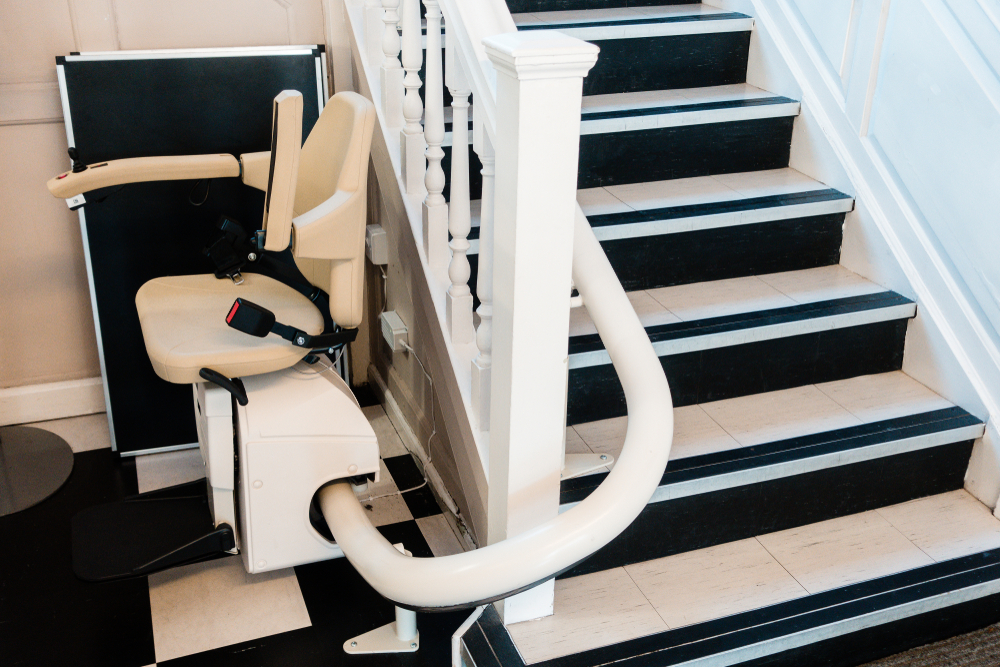
Navigating stairs safely can become more challenging as mobility needs change, especially in homes with multiple levels. Many homeowners in the Binghamton area want to remain in the homes they love, and choosing the right stairlift is an important step toward maintaining independence without relocating.
Quick Answer
The right stairlift depends on the shape of your staircase. Straight stairlifts are designed for staircases without turns or landings and are typically faster to install. Curved stairlifts are custom-built to follow staircases with bends, landings, or spiral sections. Understanding your home’s layout and your long-term mobility needs can help you determine which option offers the best fit.
What Local Readers Should Know
- Many homes throughout Binghamton and nearby communities feature older floor plans with unique staircase designs that influence stairlift selection.
- Straight stairlifts generally have shorter installation timelines because they use standardized rails.
- Curved stairlifts require custom manufacturing to match the exact dimensions of your staircase.
- Homes in Broome County, Johnson City, Endicott, Vestal, and Chenango Bridge often feature both straight and multi-landing staircases, making professional measurements essential.
- A properly selected stairlift can help homeowners remain safely in their homes while reducing the risk of falls.
Why This Matters Locally
Choosing the right stairlift matters because many homes throughout the Southern Tier were built decades ago and often feature staircases that differ significantly from newer construction. Whether you own a traditional colonial near Recreation Park, a split-level home in Vestal, or a historic residence in Johnson City, the layout of your staircase determines which stairlift will work safely and effectively.
At Penn York Medical, we help homeowners understand their accessibility options so they can make informed decisions based on their home’s design, mobility goals, and budget.
Straight Stairlifts Are Best for Simple Staircases
Straight stairlifts are designed specifically for staircases that travel in one continuous line without curves or intermediate turns. Because the rail is manufactured in standard lengths, installation is often quicker and less complex than custom alternatives.
Straight stairlifts are commonly recommended for:
- Single-flight staircases
- Ranch homes with basement access
- Townhomes with uninterrupted stairways
- Homes without intermediate landings
- Homeowners seeking a cost-effective accessibility solution
Many properties throughout Binghamton neighborhoods feature this type of staircase, making straight stairlifts a practical solution for a wide range of households.
Curved Stairlifts Are Designed for Complex Staircases
Curved stairlifts are custom-built to follow staircases that include turns, multiple landings, or spiral sections. Every rail is manufactured using precise measurements taken from the home’s staircase to ensure a smooth and safe ride.
Curved stairlifts are commonly installed when staircases include:
- Ninety-degree turns
- One or more landings
- Multiple levels connected by a single staircase
- Spiral or winding staircases
- Irregular architectural layouts
Although curved stairlifts require more planning and manufacturing time, they allow homeowners to maintain full access without modifying the staircase itself.
Local Field Observations
Professional experience throughout the Binghamton region shows that staircase layouts vary considerably depending on the age and style of the home. Older homes often feature narrower stairways or multiple landings, while newer developments may have long, straight staircases.
Because every home is different, an in-home assessment provides the most accurate recommendation rather than relying solely on photographs or measurements taken by the homeowner.
How Stairlift Choice Affects Daily Life
Selecting the correct stairlift influences much more than simply traveling between floors.
The right system can improve:
- Daily independence
- Confidence using the stairs
- Safety for family members
- Access to bedrooms and bathrooms
- Long-term ability to remain at home
An improperly selected stairlift may not fit the staircase correctly or provide the smooth operation homeowners expect.
Warning Signs That It May Be Time to Consider a Stairlift
The need for a stairlift often develops gradually. Common signs include:
- Feeling unsteady while climbing stairs
- Avoiding the second floor whenever possible
- Needing to hold tightly to railings
- Increased fatigue after using stairs
- Recovering from surgery or injury
- Difficulty carrying laundry or household items upstairs
- Family members expressing concern about fall risks
Recognizing these warning signs early allows homeowners to explore options before a serious fall occurs.
When to Call a Professional
Professional stairlift evaluations are recommended whenever mobility concerns begin affecting everyday life. While homeowners can identify whether a staircase appears straight or curved, determining the appropriate equipment requires precise measurements and an understanding of safety clearances.
A professional assessment can help identify:
- Rail placement options
- Seat positioning
- Power supply requirements
- Clearance for other household members
- Appropriate safety features
Common Reasons One Stairlift Fits Better Than Another
Several factors determine whether a straight or curved stairlift is appropriate.
Staircase Design
The physical layout of the staircase is the primary deciding factor.
Home Architecture
Historic homes throughout Broome County often include architectural features that require customized rail systems.
Mobility Needs
Some users benefit from additional features such as powered swivel seats or folding footrests depending on their mobility level.
Long-Term Planning
Homeowners planning to age in place may benefit from choosing a solution that accommodates future accessibility needs.
Prevention and Maintenance
Regular maintenance helps stairlifts operate safely and reliably throughout the year.
Homeowners can:
- Keep the rail clean and free of debris.
- Avoid placing objects on the staircase.
- Test safety features periodically.
- Keep batteries properly charged if applicable.
- Schedule professional inspections according to manufacturer recommendations.
Routine service helps identify minor issues before they become larger repairs.
What Results Should You Expect?
A properly selected stairlift should provide smooth, reliable transportation between floors while blending into the home’s existing staircase. Installation generally requires minimal structural changes because most stairlifts attach directly to the staircase rather than the wall.
Homeowners often report greater confidence navigating their homes and improved independence once the stairlift is installed.
Common Mistakes to Avoid
Mistake: Assuming every staircase can use a straight stairlift.
Consequence: Ordering equipment that cannot be installed safely.
Better Approach: Have the staircase professionally measured before selecting a model.
Mistake: Choosing based only on price.
Consequence: Overlooking important safety or customization needs.
Better Approach: Consider the staircase layout, future mobility needs, and long-term value.
Mistake: Waiting until after a fall.
Consequence: Increased injury risk and unnecessary stress.
Better Approach: Explore stairlift options when stairs first begin becoming difficult.
A Common Local Scenario
A homeowner in the greater Binghamton area begins avoiding the second floor after knee surgery. Initially, they consider a standard straight stairlift, but an in-home evaluation reveals the staircase includes a landing with a ninety-degree turn. A custom curved stairlift provides safe access to every level without requiring major remodeling.
Related Accessibility Solutions
Depending on the home’s layout and the homeowner’s needs, related mobility solutions may include:
- Straight stairlift installation
- Curved stairlift installation
- Stairlift replacement
- Stairlift maintenance
- Accessibility consultations
Comparing Your Options
| Feature | Straight Stairlift | Curved Stairlift |
|---|---|---|
| Staircase Type | Straight flight only | Curves, turns, and landings |
| Rail Design | Standard | Custom-built |
| Installation | Typically quicker | Requires custom manufacturing |
| Cost | Generally lower | Typically higher due to customization |
| Best For | Simple staircases | Complex staircase layouts |
Service Areas
We proudly assist homeowners throughout Binghamton, as well as nearby communities including Johnson City, Endicott, Vestal, Chenango Bridge, Kirkwood, and other surrounding areas in Broome County.
The Cost of Waiting
Delaying accessibility improvements can increase the likelihood of falls and make daily routines more difficult over time. Installing the appropriate stairlift before mobility becomes a serious concern helps homeowners continue using every level of their home safely and comfortably.
Frequently Asked Questions
Which stairlift is most common in Binghamton homes?
Straight stairlifts are common because many homes have uninterrupted staircases, but older homes throughout the area frequently require custom curved models due to landings or turns.
How do I know if I need a curved stairlift?
A curved stairlift is necessary if your staircase changes direction, includes one or more landings, or follows a spiral or winding design. A professional measurement confirms the best option.
Can a stairlift be installed without major remodeling?
Yes. Most stairlifts attach directly to the staircase rather than the wall, allowing installation with minimal changes to the home’s structure.
Are stairlifts suitable for older homes in Broome County?
Yes. Many older homes can accommodate stairlifts, although custom curved systems are sometimes needed because of unique staircase layouts.
How long does stairlift installation take?
Straight stairlifts are often installed more quickly because they use standard rails. Curved stairlifts require additional time because each rail is custom manufactured for the specific staircase.
Can I stay in my home instead of moving?
For many homeowners, a stairlift makes it possible to continue safely accessing multiple levels of the home, supporting aging in place and greater independence.
Helping You Find the Right Stairlift Solution
Every staircase is different, and the right stairlift begins with understanding your home’s unique layout. Whether your staircase is straight or includes multiple turns, choosing equipment designed specifically for your space helps improve safety, comfort, and long-term accessibility.
Discover the Best Stairlift for Your Home
Our team is here to help you understand your options and recommend a solution tailored to your staircase and mobility needs.